
After spending 25 years working hands-on as a printer service technician, I realised something that completely changed the way I look at our work:
The biggest problem in service teams is not a lack of skill.
It was that crucial knowledge that just wasn’t accessible when you needed it most.
Over the years, I’ve had the chance to work just about everywhere: with a medium-sized nationwide company of 30 technicians, a tight-knit local team of five engineers, and even an international corporation with over 100 techs. Different markets, different setups, different management styles – yet everywhere I went, I saw the same operational pattern repeat itself.
Every printer service organisation I’ve seen is built on people with wildly different levels of experience.
You have senior experts who can diagnose complex faults almost instinctively. You have mid-level technicians specialising in installations and maintenance. And you have junior engineers who are just starting their careers.
The real challenge isn’t the diversity of skills.
It’s figuring out how knowledge flows between everyone.
The Hidden Weakness in Printer Service Operations
In almost every company I’ve worked for, expert knowledge was technically documented – but practically unavailable.
A typical workflow looks like this:
A technician fixes a device, records what they did, lists the parts they used, and marks the job as complete in the system.
From an administrative perspective, everything is fine.
From a knowledge perspective, something valuable is lost.
All the diagnostic thinking, shortcuts, and hard-earned experience behind that repair get boiled down to a short service note. That knowledge is technically “archived” – but it’s basically gone for good.
Weeks later, I’d see a junior tech standing in front of the same kind of device, staring at the same error code – but without quick access to that practical insight.
This is not a competence problem.
It’s an information accessibility problem.
The Real Cost of Slow Onboarding
One of the biggest headaches in printer service – at least in my experience – is getting new technicians up to speed fast.
Even experienced engineers coming from another manufacturer need time to adapt to:
- New device models
- Typical recurring faults
- Internal procedures
- Documentation standards
During that period:
- Senior technicians are interrupted for support
- Service time increases
- Productivity drops
- Frustration grows on both sides
I’ve watched junior techs spend 30 – 40 minutes diagnosing a fault that a senior colleague could spot in five – just because the crucial experience wasn’t structured or searchable.
And in a busy service environment, those small delays add up.
Why Generic Service Software Doesn’t Solve It
Most companies today use some kind of service management software. These systems are useful for ticket tracking, reporting, and performance metrics.
But they are not designed specifically for printer service workflows.
They record:
- What was done
- Which parts were used
- When the job was completed
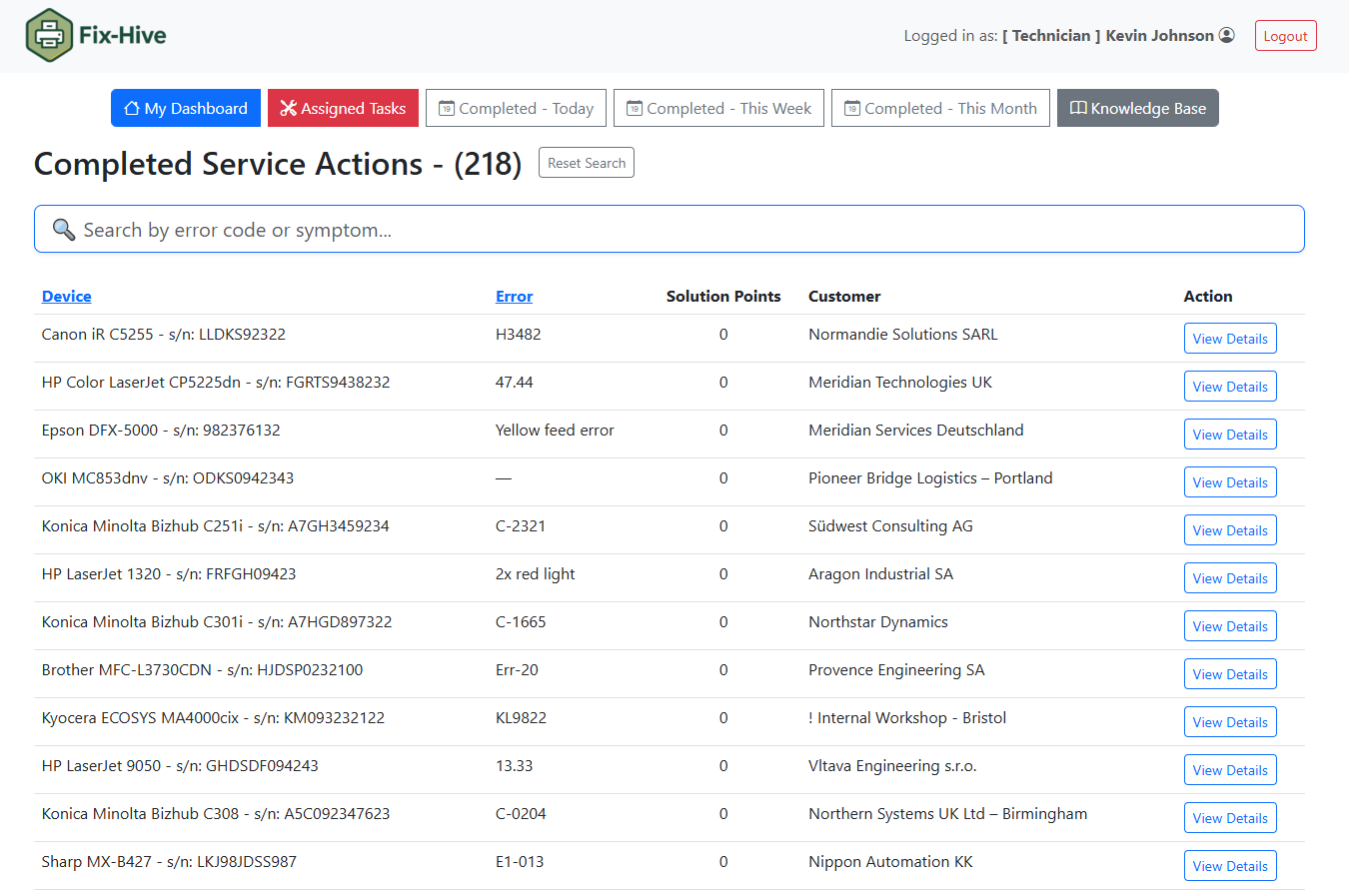
But they rarely capture how faults were diagnosed or how knowledge should be reused.
For a field technician, scrolling through old tickets is not a practical way to find solutions.
That gap – between administration and real technician knowledge – is what finally pushed me to build something different.

Why I Built Fix-Hive
Fix-Hive was not created as a startup idea.
I built it because I genuinely wished I’d had a tool like this during my years in the field.
After running into the same knowledge bottlenecks over and over, I decided to design a printer service management app that actually fits real service workflows – not just reporting requirements.
My goals were simple and personal:
- Make expert knowledge instantly accessible
- Reduce the time needed to complete service tasks
- Simplify daily procedures for the entire service organisation
The core principle was this:
Every repair should strengthen the team’s collective knowledge.
Not just close a ticket.
Not just satisfy reporting.
But actively support the next technician facing a similar problem.
Designed for Real Field Conditions
A junior technician standing in front of a malfunctioning device does not have time to read long documentation. They need fast, practical answers.
With a mobile-first approach, a technician can enter an error code or short description and receive relevant diagnostic suggestions within seconds.
But over time, I realised something important for myself:
Improving diagnostics alone is not enough.
The entire service workflow – from client reporting to management oversight – needs to be simplified.
Practical Benefits for Every Role in the Service Process
For Managers
From a management perspective, visibility and structure are essential.
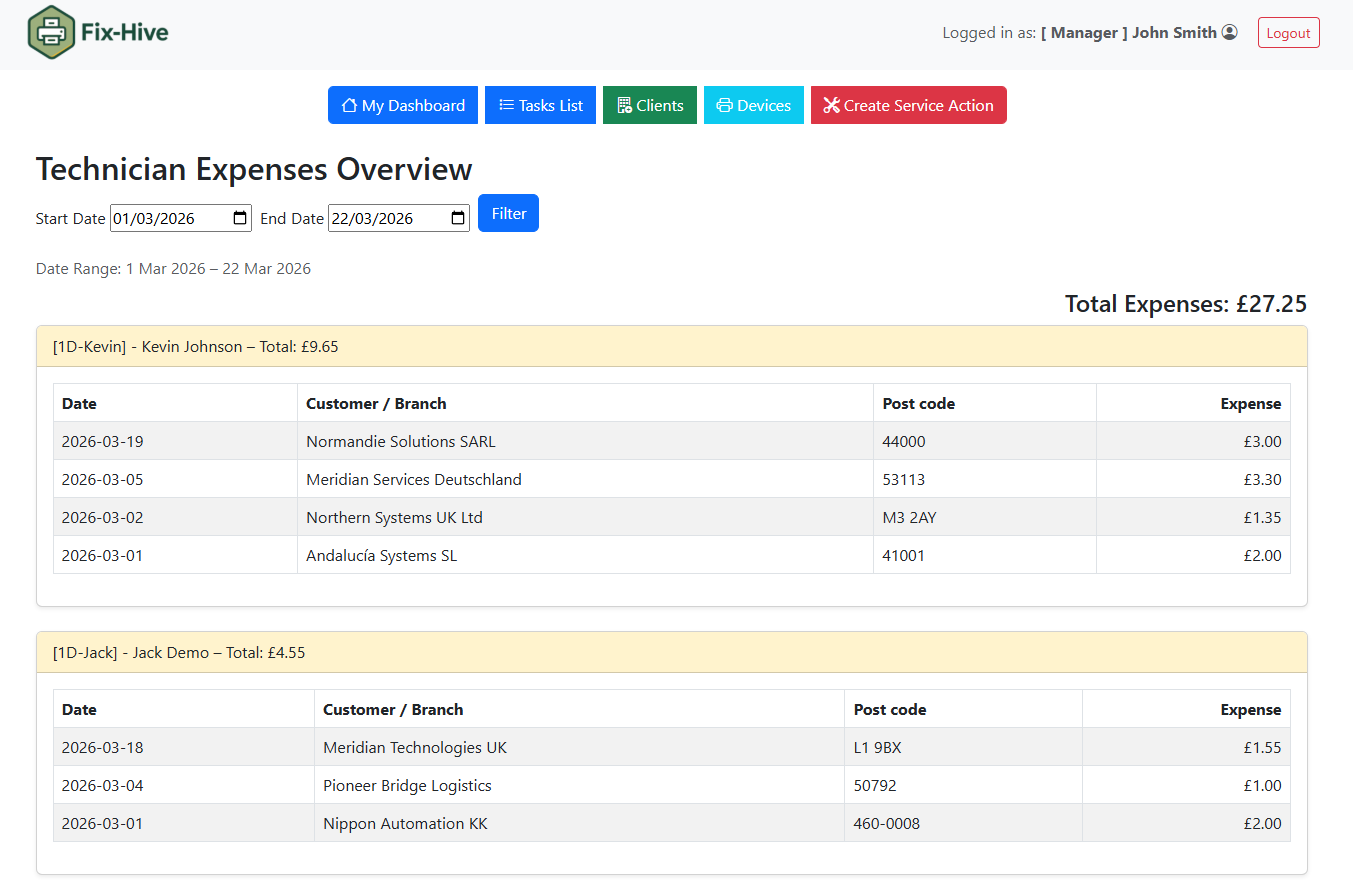
Managers can:
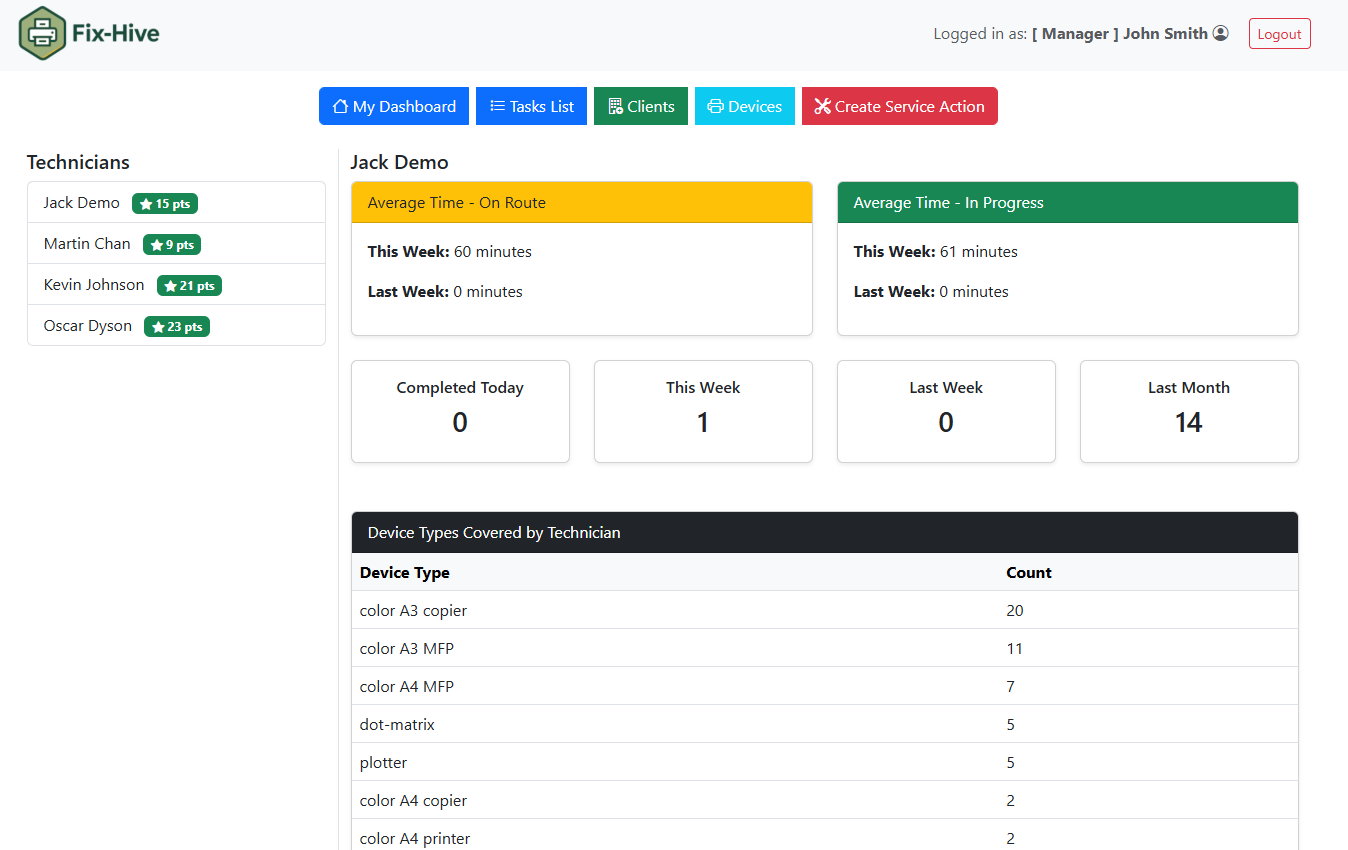
- Access technician performance data
- See which types of devices each technician repairs most often
- Identify areas where additional training may be needed
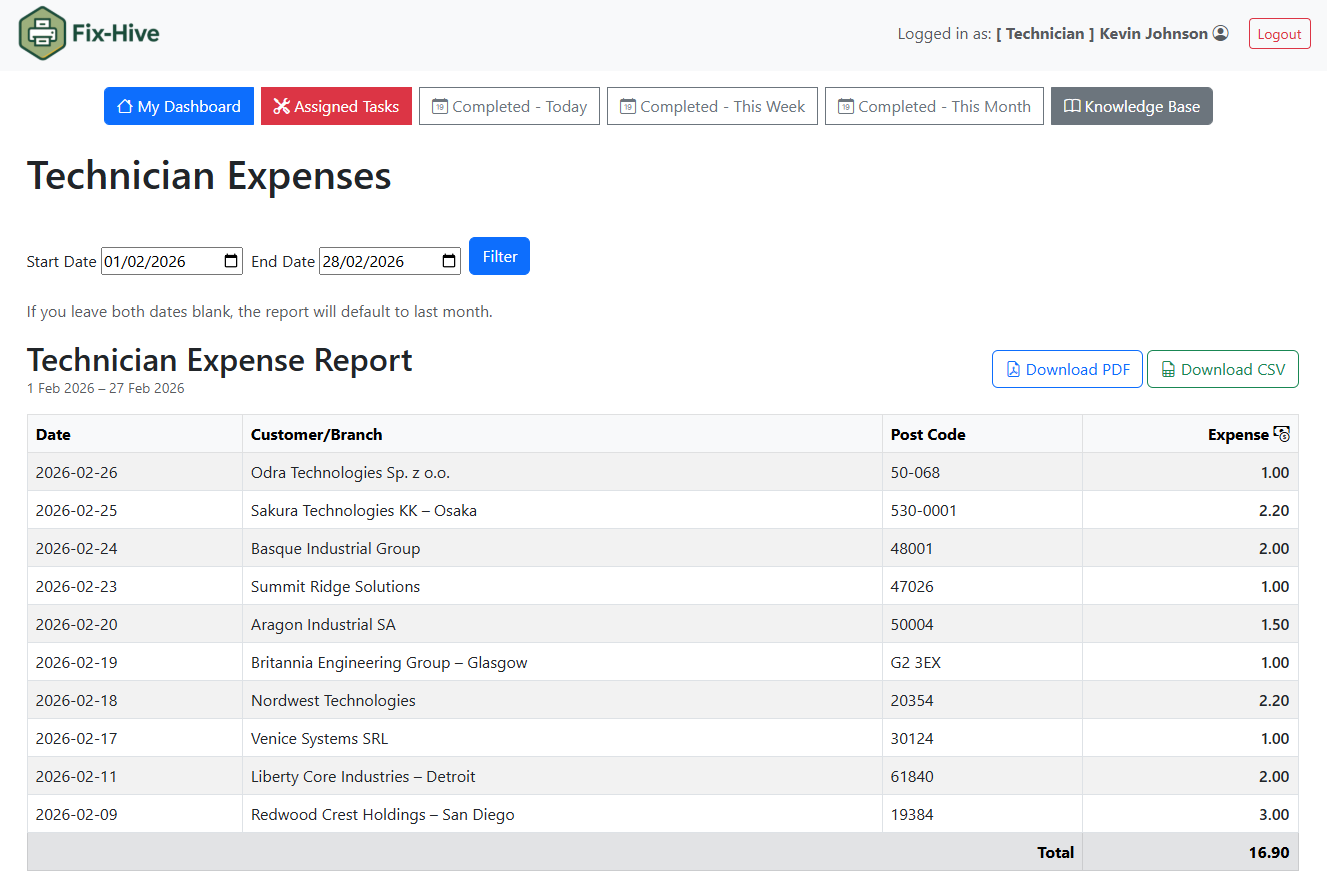
- Monitor technician-related expenses in an organised way
Instead of relying on assumptions or scattered reports, decisions can be based on structured service data. This supports better planning, fair evaluation, and more targeted skill development.
For Support Teams
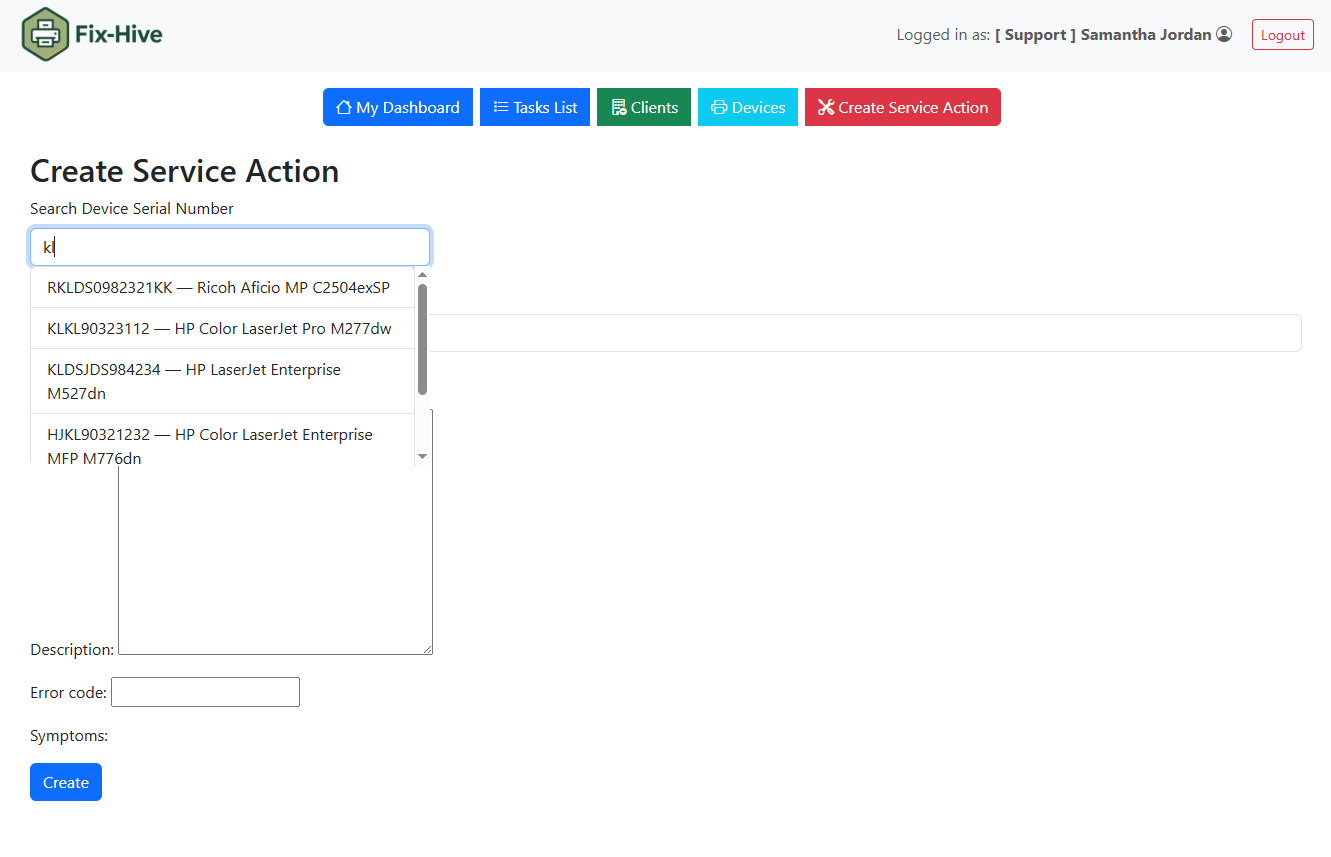
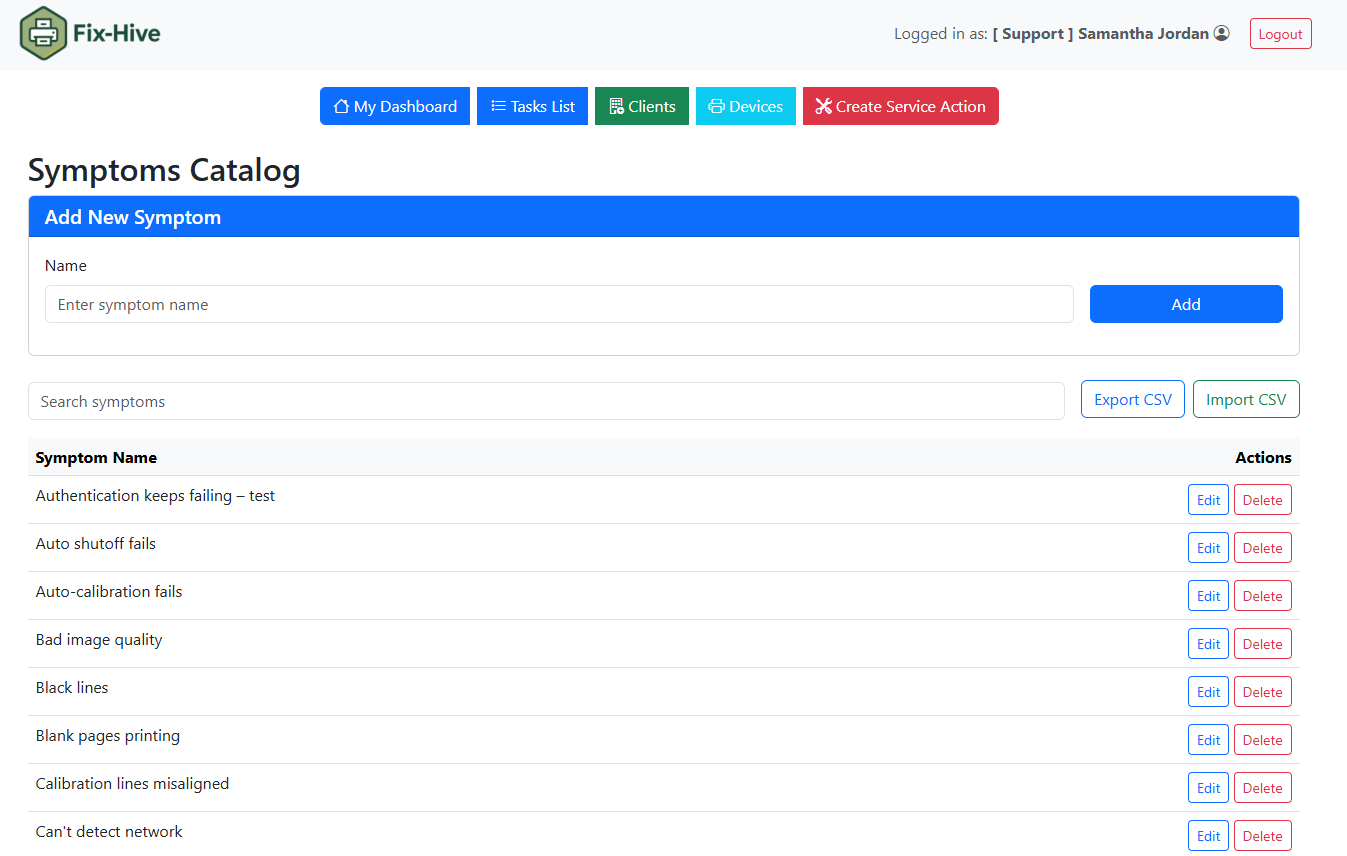
Support staff are often the first point of contact when a client reports a fault. In many companies, logging a service ticket can take several minutes due to incomplete information.
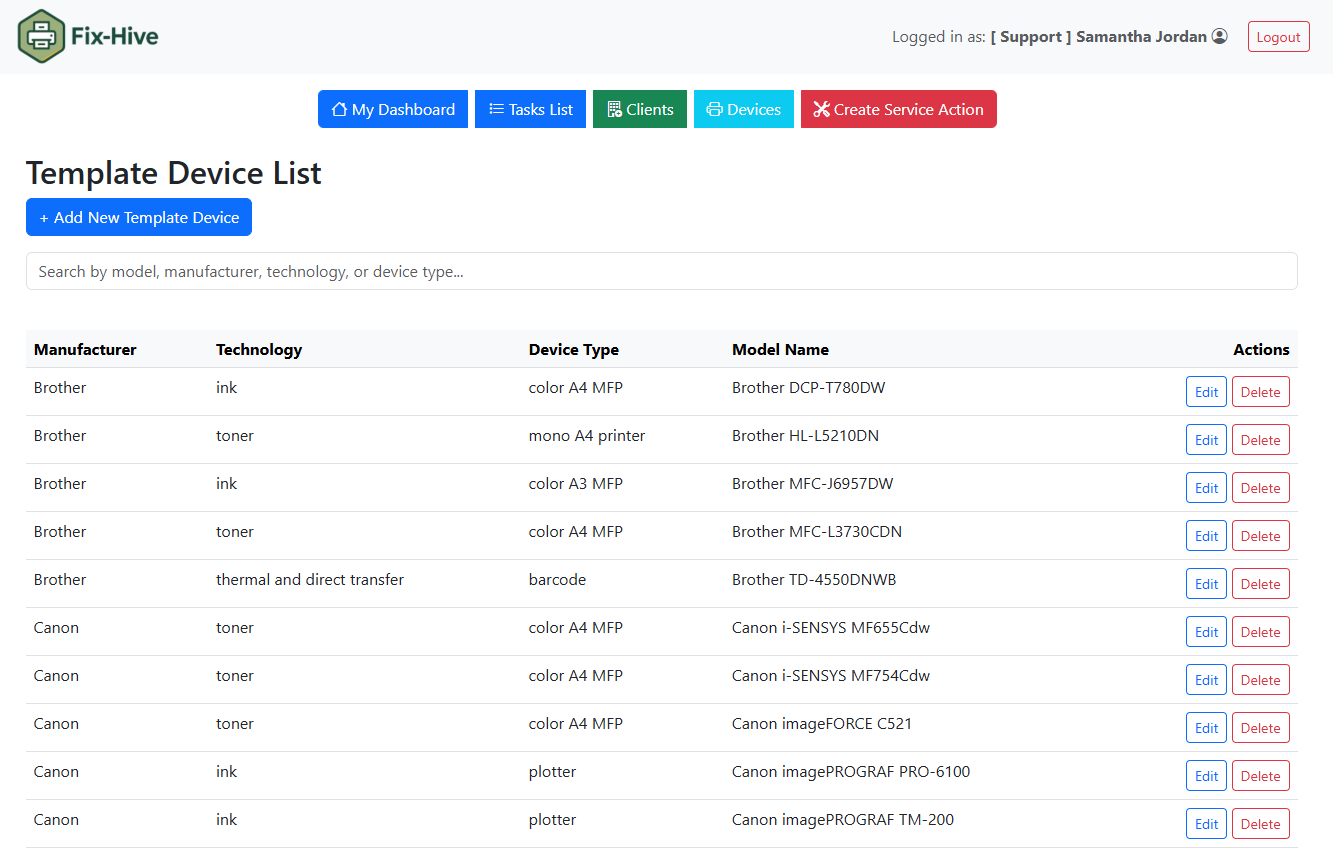
With a predefined catalogue of symptoms and fault types, a service ticket can be registered in around 10 seconds – even if the client provides only limited details.
This means:
- Faster ticket creation
- More structured information for technicians
- Fewer follow-up clarification calls
Small improvements at this stage significantly impact overall response time.
For Technicians
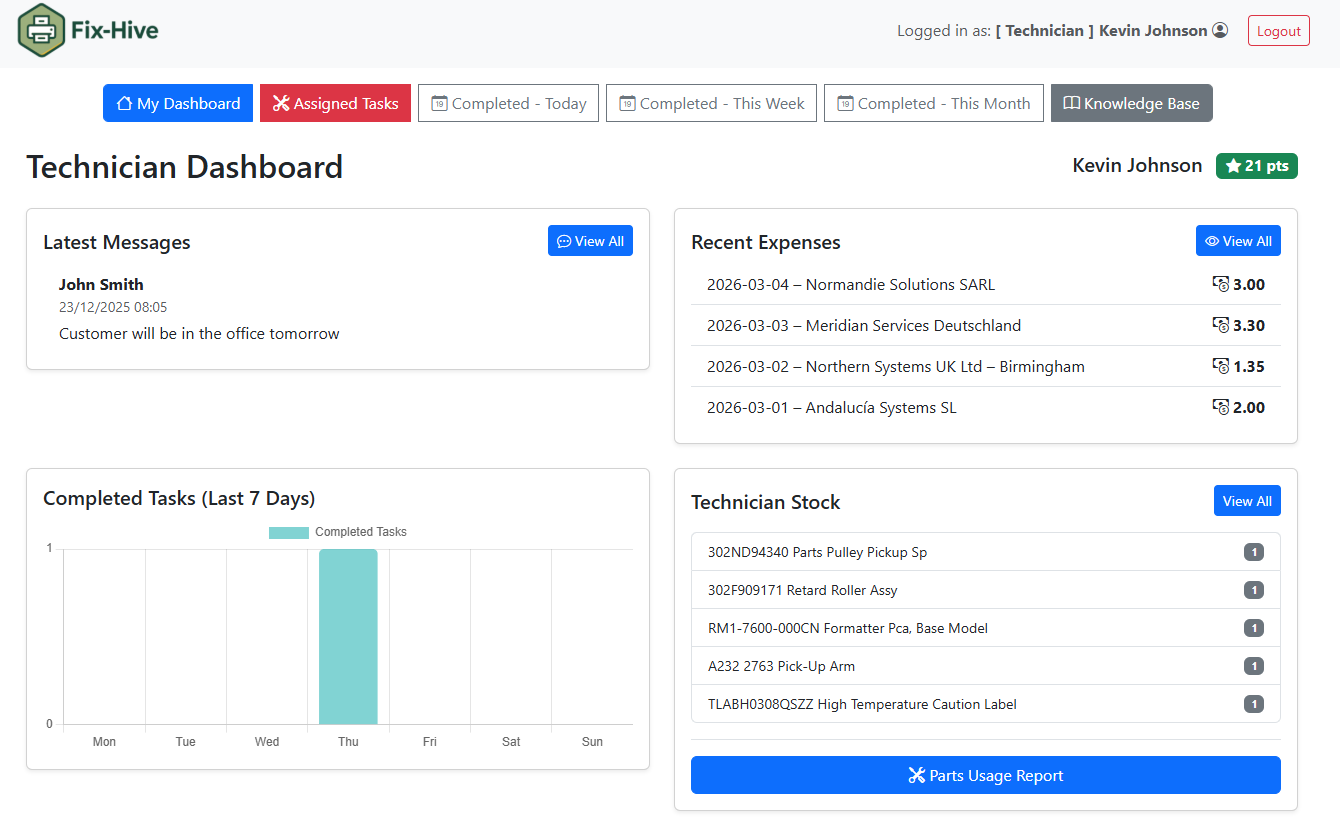
Technicians usually want to focus on diagnostics and repairs – not paperwork.
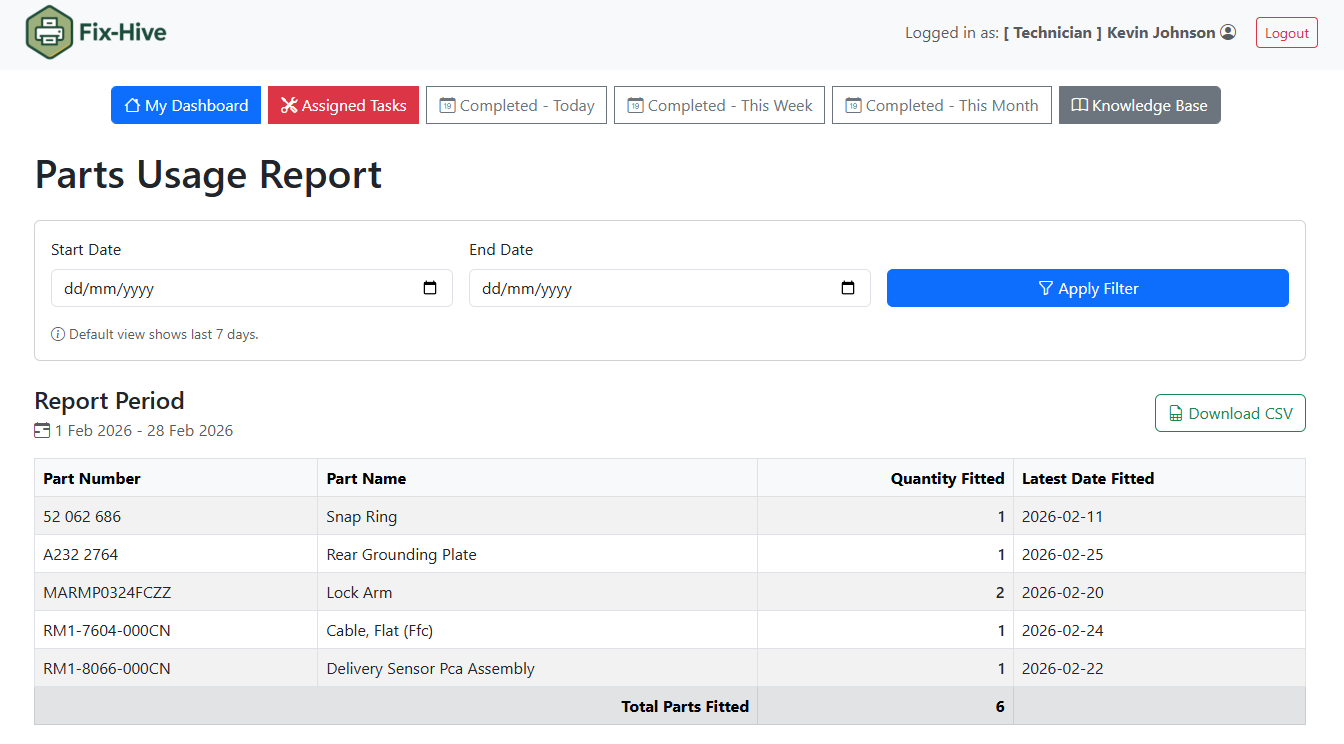
Administrative tasks, especially expense reporting, can become burdensome. Filling out expense forms at the end of the month can easily take an hour or more.
That is why the system allows technicians to claim expenses in just 3-5 clicks directly after completing a job, while everything is still fresh in their minds.
Instead of batch-processing paperwork once a month, expenses are logged naturally as part of the workflow. This reduces frustration and improves accuracy simultaneously.
For Clients
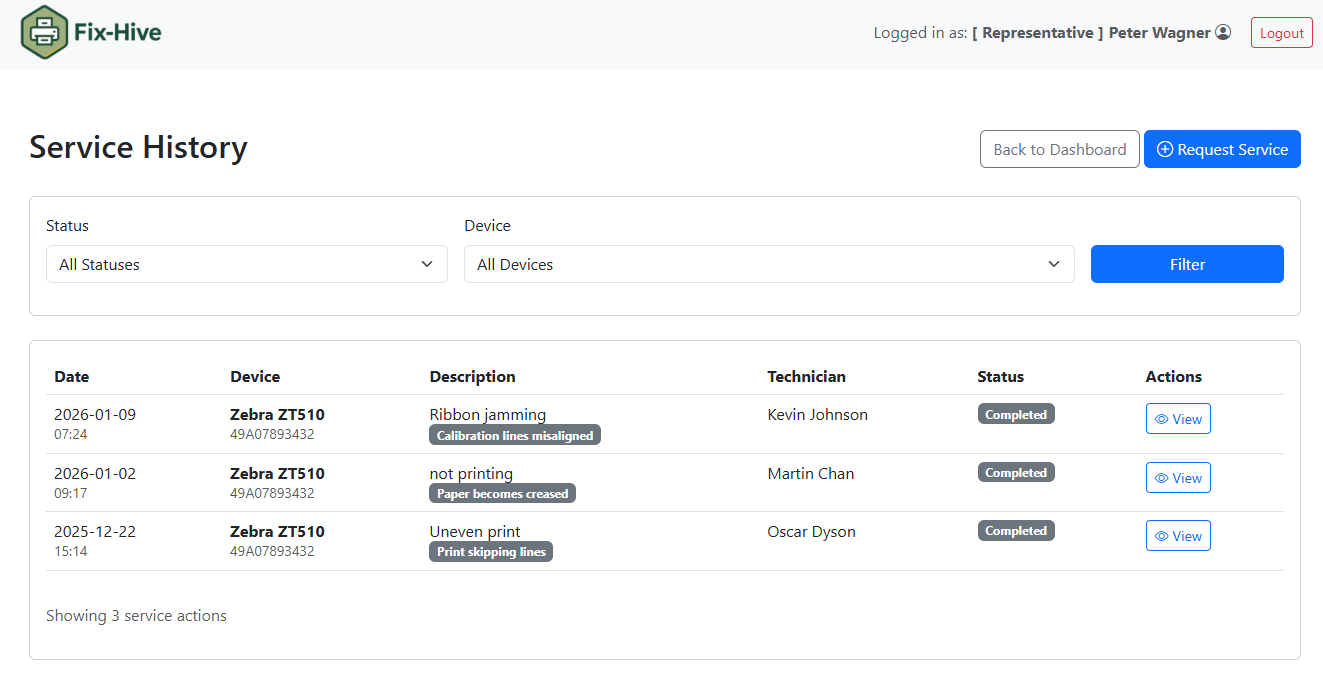
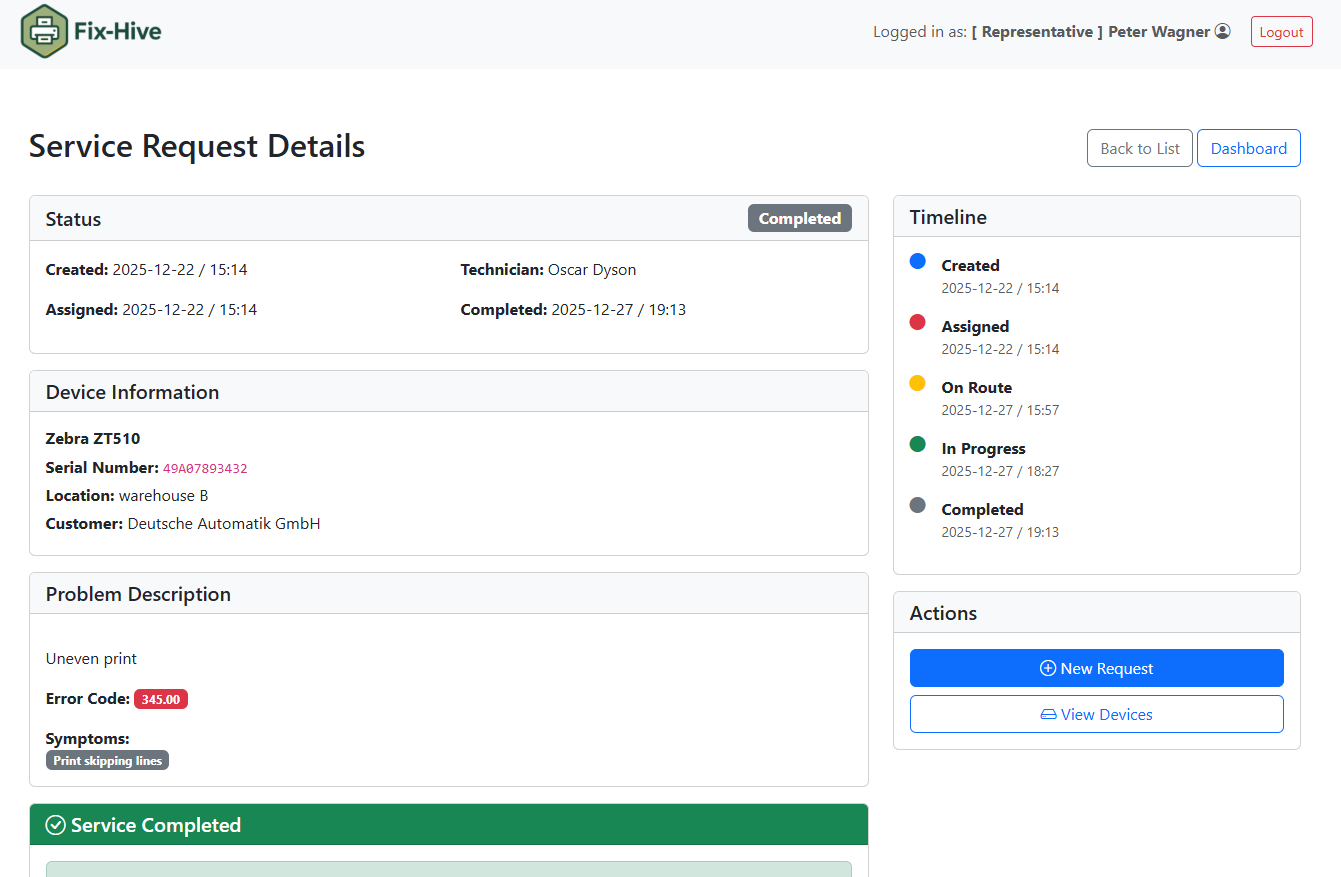
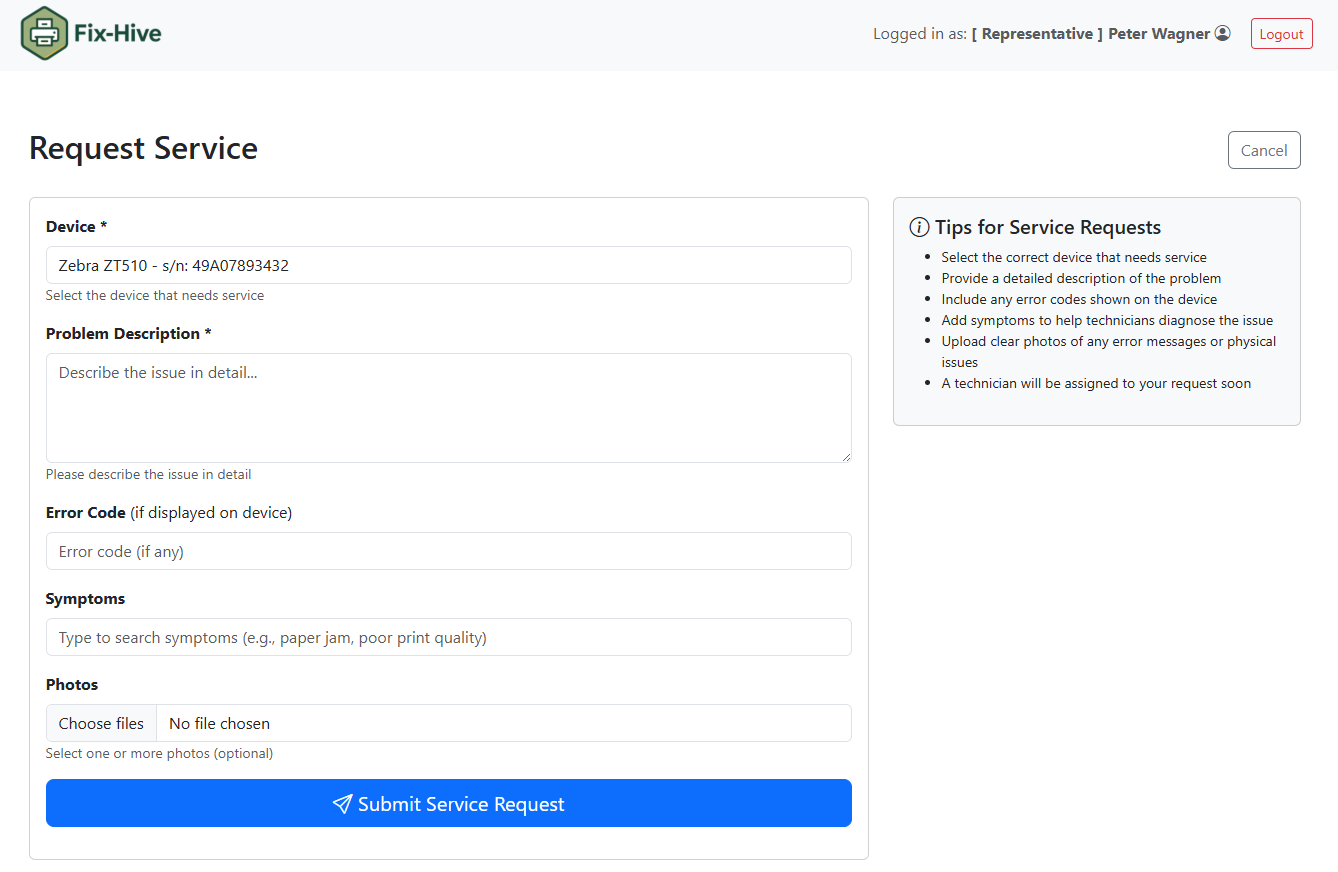
Clients also influence the efficiency of the entire service chain.
In many cases, fault reporting is delayed because the client does not know how to correctly describe the issue or provide device information.
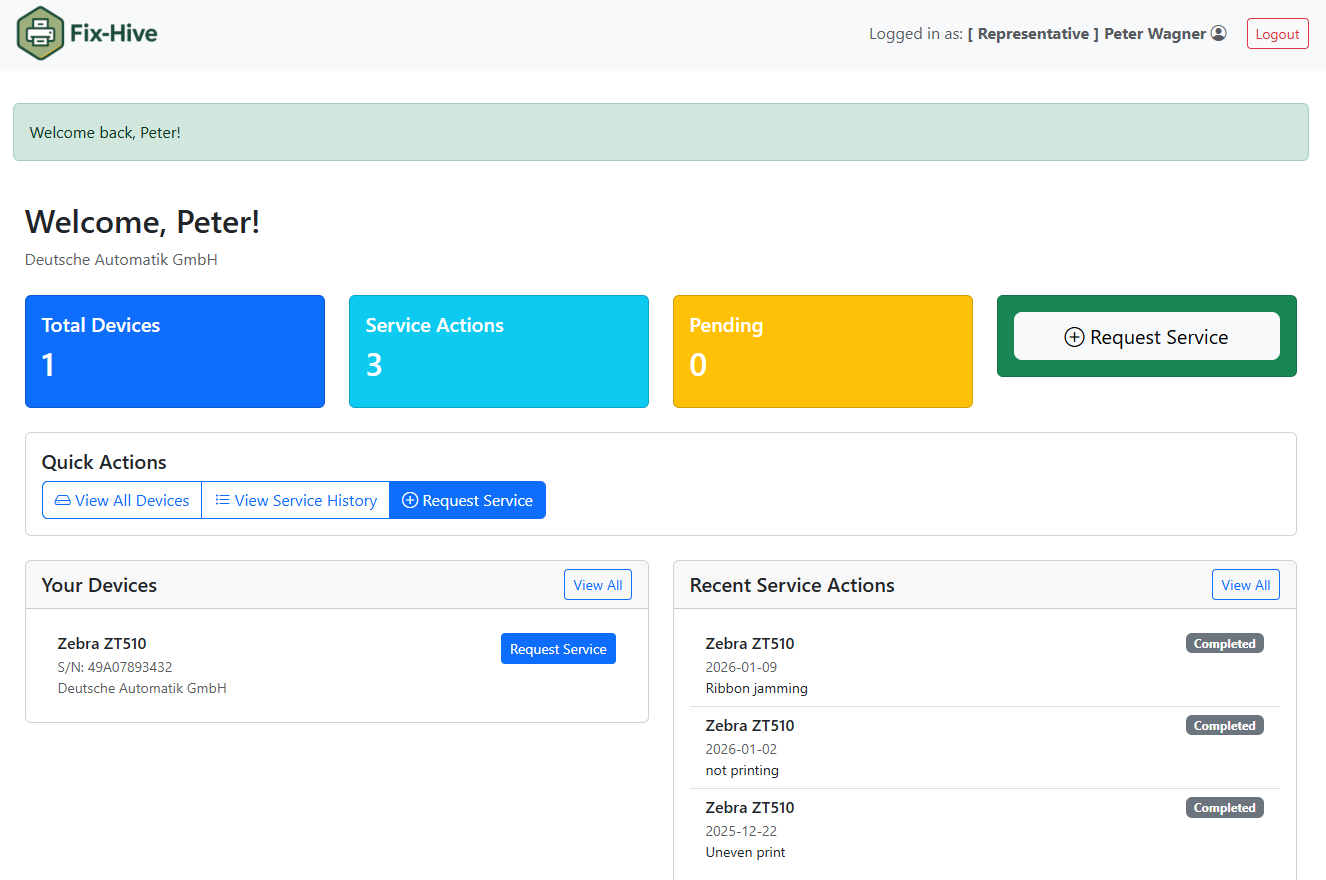
By placing a QR code directly on the device, linked to its service profile, a client can report a fault in around 30 seconds. The request is automatically connected to the correct machine, reducing errors and speeding up dispatch.
This improves communication and shortens response times – without adding complexity.
More Than Software – A Structured Knowledge Culture
After 25 years in the printing industry, I am convinced that the future of efficient service organisations lies not just in better hardware or faster logistics.
It is a better use of internal knowledge.
Every solved fault contains experience. Every diagnostic process contains insight. When that experience becomes structured, searchable, and accessible, the entire team becomes stronger.
Fix-Hive is my way of bridging the gap between field expertise and digital tools – by building a platform specifically for real printer service teams like the ones I’ve spent my career with.
Not to replace technician experience – but to amplify it.
Because in the end, the most efficient service companies are not the ones with the most technicians.
They are the ones that use their collective knowledge in the smartest way.